
Can I Power My Electric Car with Solar Power in Scotland?
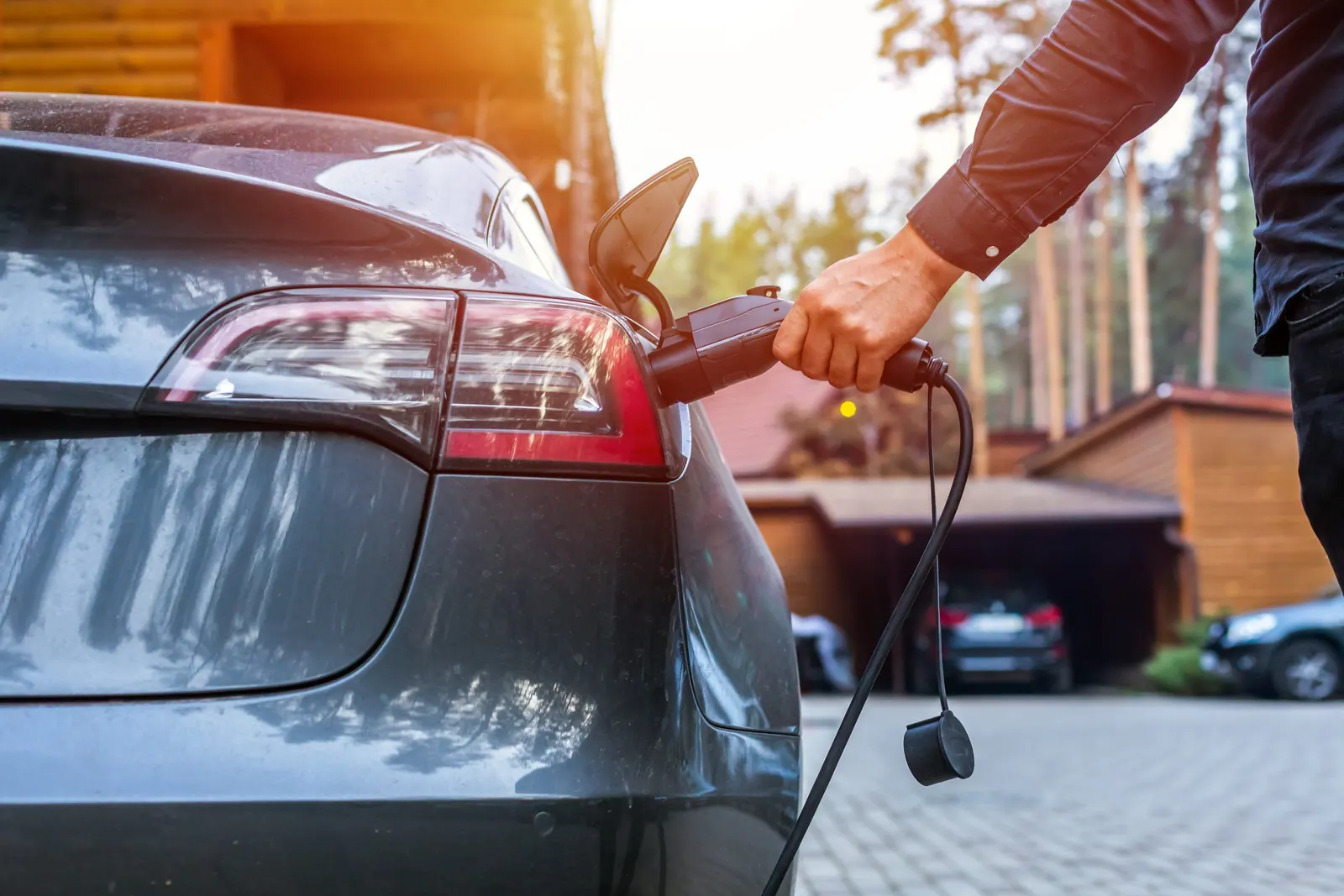
If you already have solar panels — or you’re planning to install them — charging your electric vehicle from your own roof is one of the most practical ways to cut running costs. It turns a major expense into something you generate yourself.
The short answer is yes, solar panels can power an EV in Scotland. The real question is how much of your charging you can realistically cover, what setup works best, and how to get the most value from your system all year round.
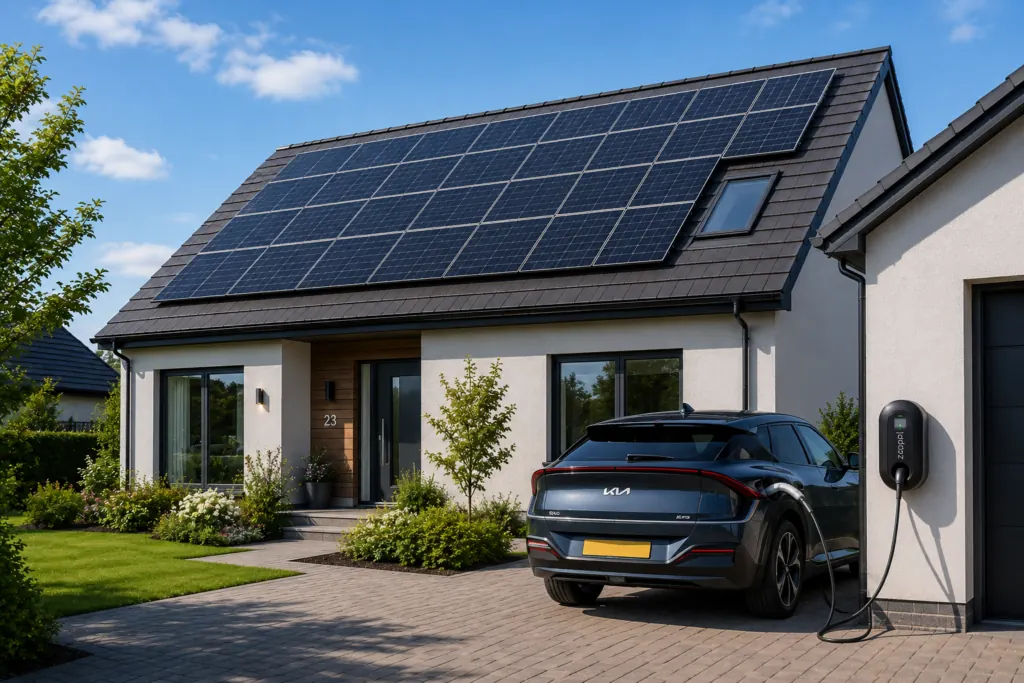
Car using EV charging with solar pannels
Can Solar Panels Charge an EV?
Yes, they can. A solar PV system generates electricity that your inverter converts for home use, and that power can be used to charge your electric car through a compatible home charger.
How much solar power ends up in your EV depends on:
- The size of your solar panel system.
- How much electricity your panels generate on a given day.
- When you charge your car.
- Whether you have battery storage.
- Your EV’s battery size and charging speed.
The system works best when your car is available during the day, because that is when solar output is highest. If you usually charge overnight, you will rely more on grid electricity unless you have a battery or a smart charging setup.
How Much Solar Generation Do You Need?
A typical EV driver in Scotland covers around 8,000 to 10,000 miles a year. At roughly 3 to 4 miles per kWh, that works out at about 2,000 to 3,300 kWh of electricity annually.
A 4kW solar panel system in Central Scotland can generate roughly 2,900 to 3,400 kWh per year, depending on roof orientation, shading, and location. That means a well-designed solar system can potentially cover a large share of your EV’s annual energy needs.
In practice, not all of that electricity will go directly to your car. Some will be used by the home, and some may be exported to the grid. But with the right setup, you can make much better use of the power you generate.
Typical charging scenarios
- 3kW system, no battery, daytime charging: around 600 kWh per year to EV use.
- 4kW system with battery and smart charging: around 1,200 kWh per year to EV use.
- 4kW system with battery and optimised charging: up to 1,800 kWh or more per year to EV use.
These figures are illustrative, but they show the potential. The exact result will depend on your usage pattern, tariff, roof space, and system design.
Timing Makes a Big Difference
When you charge matters just as much as what you charge with. Solar generation is strongest during daylight, often between late morning and mid-afternoon, with longer output windows in spring and summer.
If your car is plugged in during those hours, you can use your own solar power directly. If you charge overnight, you will usually import electricity from the grid, even if your panels generated surplus power earlier in the day.
There are three main ways to improve solar EV charging:
- Charge during the day to use solar directly.
- Add battery storage to hold surplus solar for later use.
- Use a smart charger to match charging with solar production or off-peak rates.
That is why solar EV charging works best as part of a joined-up system rather than as separate pieces.For more guidance on choosing the right setup, see this helpful guide on solar EV chargers in the UK.
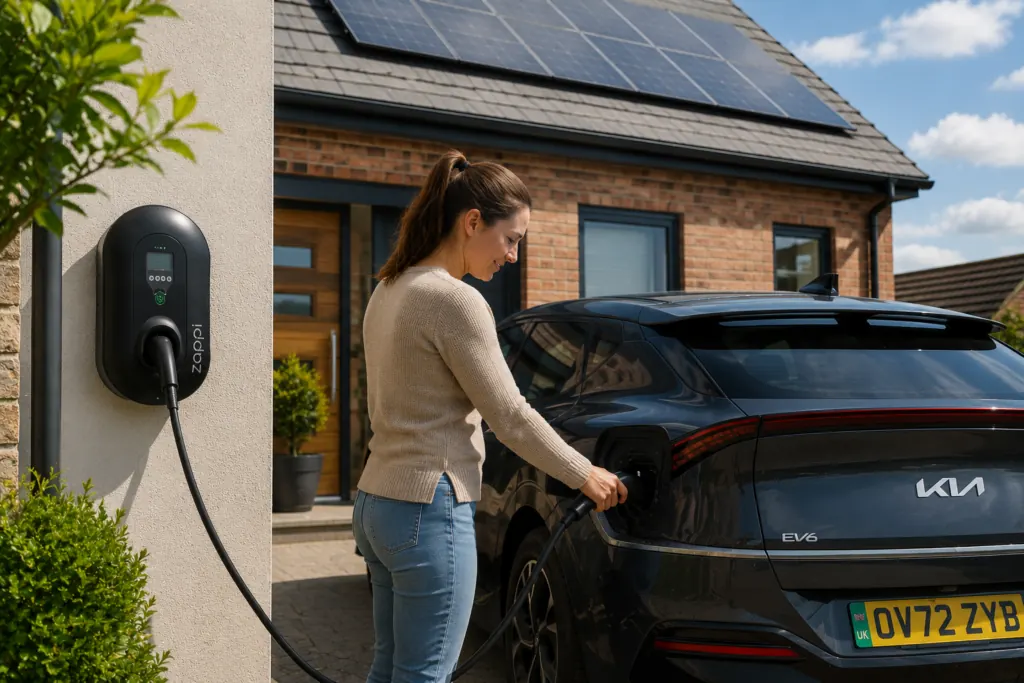
Car using EV charging with solar pannels
Why Zappi Is a Strong Option
A smart charger such as the myenergi Zappi is a strong choice for homes with solar panels. It is designed to work with solar PV and can divert surplus energy into your car automatically.
Zappi offers several charging modes:
- ECO+ mode: charges only from surplus solar, with no grid import.
- ECO mode: uses solar surplus while allowing a small grid top-up when needed.
- Fast mode: charges at full speed from the grid.
ECO+ mode is especially useful if your goal is to maximise solar self-consumption. It allows your EV to act a bit like a large battery, taking in electricity that might otherwise be exported at a lower rate.
Zappi can also work alongside battery storage, so you can prioritise your home battery first and then send remaining surplus to the car. That gives you more control over how your solar power is used.
Does This Work in Scotland?
Yes. Scotland’s climate is often seen as a limitation, but solar panels generate electricity from daylight, not just direct sunshine. That makes them viable across Scotland, including areas that are often thought of as less sunny.
Summer is particularly useful for solar EV charging because the days are long and solar output is higher. Winter is more challenging, but that is also when many drivers are happy to charge overnight or use off-peak tariffs.
For Scottish homes, the aim is not to expect solar to cover every mile all year round. It is to reduce grid use significantly across the year and make the system as efficient as possible.
What You Could Save
The financial case depends on how much you drive, what tariff you are on, and how much of your charging comes from solar rather than the grid.
In general, an EV driver covering 8,000 to 10,000 miles a year can spend several hundred pounds annually on grid charging. Using solar can reduce that cost, especially when combined with a smart charger and battery storage.
A few simple patterns stand out:
- Grid-only charging is usually the most expensive option.
- Solar without battery storage can still cut costs, especially with daytime charging.
- Solar plus battery storage gives you more flexibility.
- Solar plus smart charging and a cheap overnight tariff can be the most efficient overall.
Because tariffs and export rates change, exact savings should always be treated carefully unless they are based on a specific setup and current tariff data.
Off-Peak Tariffs and Solar
If you cannot always charge during daylight, an off-peak tariff can help. Tariffs such as Octopus Go or Intelligent Octopus Go are designed to give EV drivers cheaper overnight charging.
This works well alongside solar because you can use each part of the system in the most efficient way:
- Use solar directly during the day.
- Store surplus electricity in a home battery.
- Top up the car overnight at a lower rate if needed.
- Export unused solar if the system still produces more than you can consume.
For many households, this is the best balance between savings and flexibility.
Car using EV charging
Solar First, EV Charger Later
If you already have solar panels, adding an EV charger is usually straightforward. A site survey can confirm whether your inverter, consumer unit, and cabling are suitable.
If you are planning solar and EV charging together, it often makes sense to install them as one project. That can simplify the process and help the system work together from day one.
Benefits of doing both together include:
- One site survey and one installation plan.
- Lower disruption than two separate projects.
- Better system design for solar, battery, and charging together.
If you are also considering battery storage, planning the full setup early can make the final system more efficient and future-proof. Check our guide Solar Panels in Scotland: Everything You Need to Think About Before Installation
What Your Home Needs
Before installing solar EV charging, there are a few practical checks to make.
- Consumer unit capacity: your electrical board must be able to support the charger.
- Installer notification: your installer will confirm whether any network notification is needed.
- Wi-Fi connection: most smart chargers need internet access for app control and scheduling.
- MCS-certified solar: if you want to access export payments and other eligible support, your solar installation should be certified appropriately.
If your existing system is older, it is worth checking compatibility before adding an EV charger.
Should You Add an EV if You Already Have Solar?
If your solar panels are already generating surplus electricity, an EV can be a great way to use that power more effectively. Instead of exporting more electricity than you need, you can use it to offset fuel costs.
That does not mean an EV is the right choice for every household, but if you already drive regularly and have solar at home, the combination can work very well.
The reverse is also true. If you already own an EV, solar becomes more attractive because your household electricity demand is higher and easier to offset.
Will It Work in Winter?
Yes, but with more reliance on the grid. Winter solar generation is lower, so it is unrealistic to expect solar panels alone to cover all EV charging across the year.
That is why the best year-round setup usually combines:
- Solar panels.
- Battery storage.
- A smart charger.
- An off-peak tariff for times when solar is not enough.
This gives you the best mix of savings, flexibility, and convenience.
Final Thoughts
Solar can absolutely power an EV in Scotland, and for many households it is one of the most effective ways to reduce running costs. The best results come from combining solar panels with smart charging, and ideally battery storage too.
If you want the system to work well, think about the full setup rather than just the charger or the panels on their own. A well-designed solar EV charging system can reduce grid use, improve efficiency, and make home charging much cheaper over time.
We are MCS-accredited solar installers based in Bathgate, covering homes across Central Scotland. If you are thinking about whether battery storage makes sense for your property, the next step is to talk through the system design before making a decision, Conact us.
FAQs
Frequently Asked Questions
Can I charge my electric car entirely from solar?+
In theory, yes, but in practice most homes will still use some grid electricity, especially in winter.
Does Zappi work with solar panels?+
Yes. It is designed to work with solar PV and can divert surplus generation to your car.
Do I need planning permission for an EV charger?+
Usually not for a standard domestic installation, although there can be exceptions depending on the property and location.
What is the best setup for solar EV charging?+
solar PV system, battery storage, and a smart charger working together usually gives the best results.