
3kW or 4kW Solar? Choosing the Right System Size
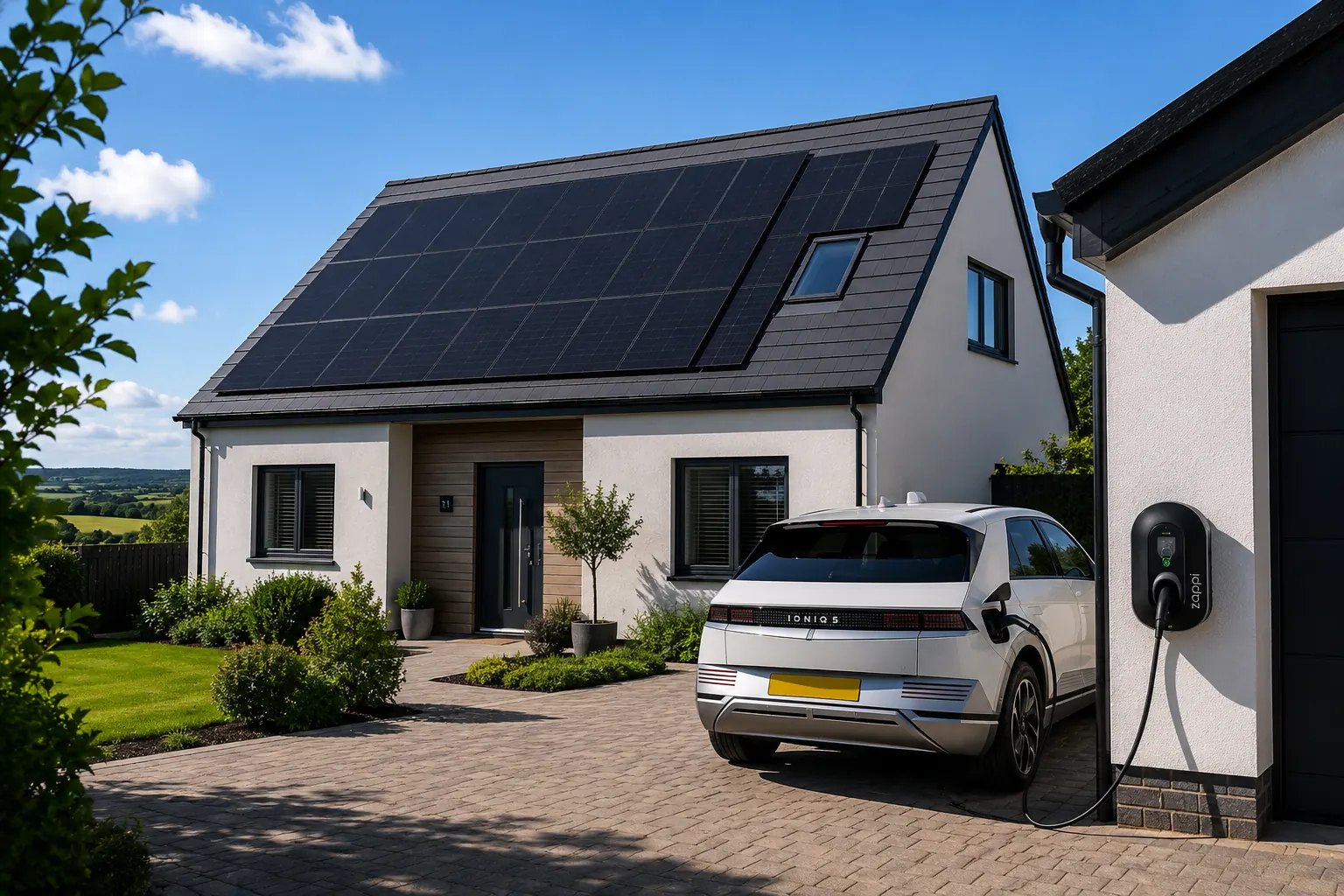
If you're planning a new solar installation rather than retrofitting an existing one, you have an advantage most homeowners don't: you get to decide your system size from scratch, before scaffolding goes up and before an inverter is ordered. That decision usually comes down to a straight choice between 3kW and 4kW solar installs and it's worth getting right, because unlike a boiler or a kitchen, a solar system is genuinely difficult to resize later without extra cost.
The difference between 3kW and 4kW sounds small on paper, but it touches three things that matter well beyond your first electricity bill: how much roof space you actually need, which inverter your installer specifies, and whether your connection to the grid needs a simple notification or a formal application. Here's what to think through before you commit to either.
3kW vs 4kW at a Glance
- A 3kW system typically needs around 7–8 modern panels.
- A 4kW system typically needs around 9–10 modern panels.
- Roof space requirements vary depending on panel wattage and layout.
- A 4kW system usually generates more electricity across the year, but the exact output depends on orientation, pitch, shading, and location.
- A larger array may improve self-use if you plan to add an EV charger or battery later.
These figures are a useful starting point rather than a quote. Actual generation depends heavily on your roof, which is why a site survey should always be the final word.
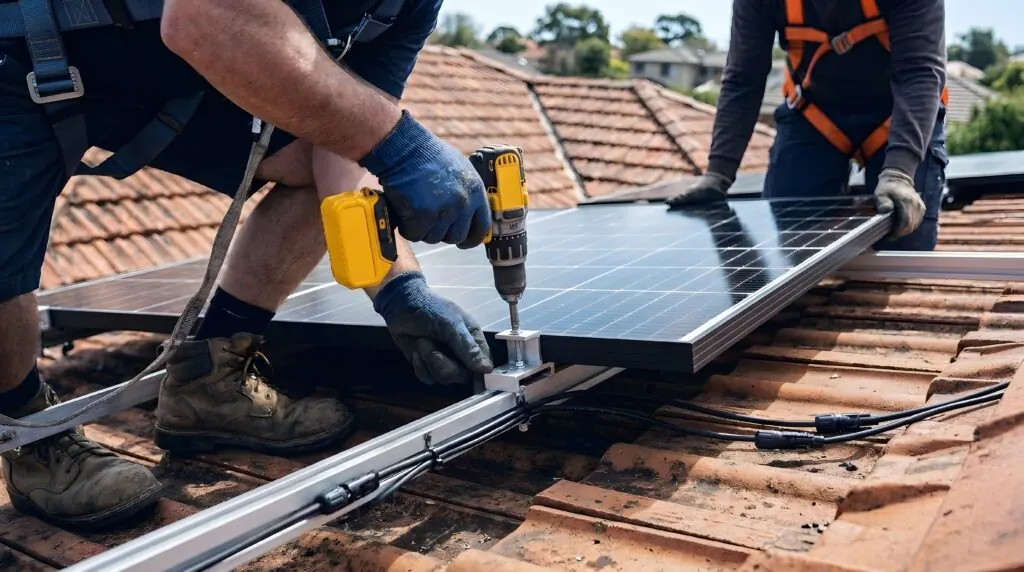
Engineers installing solar panels on a residential rooftop.
Roof Space: What Each System Actually Needs
With modern monocrystalline panels rated between 380W and 450W, a 3kW system usually needs around 7–8 panels, while a 4kW system usually needs around 9–10 panels. In practical terms, that means the roof-space difference is usually just one extra row of panels, although the exact layout depends on panel dimensions and the roof itself.
For an average Scottish semi-detached roof, both sizes will often fit comfortably on a single south-facing, south-east-facing, or south-west-facing roof plane. Where it becomes more important is on smaller roofs, dormer bungalows, or homes with obstructions such as chimneys, roof windows, or vents. In those cases, the extra panels needed for 4kW can be the difference between a neat single array and a more complex split installation.
The Inverter Question — Where the Real Decision Sits
This is the part of the 3kW vs 4kW decision that many new customers do not think about until an installer raises it, and it is often the more important half of the conversation.
In the UK, systems with an export capacity up to 3.68kW on a single-phase connection usually fall under G98, which is a connect-and-notify process. Once export capacity goes above 3.68kW, the system normally falls under G99, which requires a formal application to the Distribution Network Operator before installation begins.
A 4kW panel array does not automatically mean a 4kW inverter. A common approach is to pair a larger panel array with a 3.68kW inverter so the installation stays within the simpler process, while still capturing most of the benefit of the extra panels. In that setup, the inverter clips only a small amount of output on the rare occasions when the panels could generate more than the inverter can handle.
The key point is that your installer should confirm the DNO route in writing, including whether the whole system remains within G98 or needs G99 approval. That becomes even more important if you are also planning battery storage or EV charging, because those can affect the overall design and export arrangement.
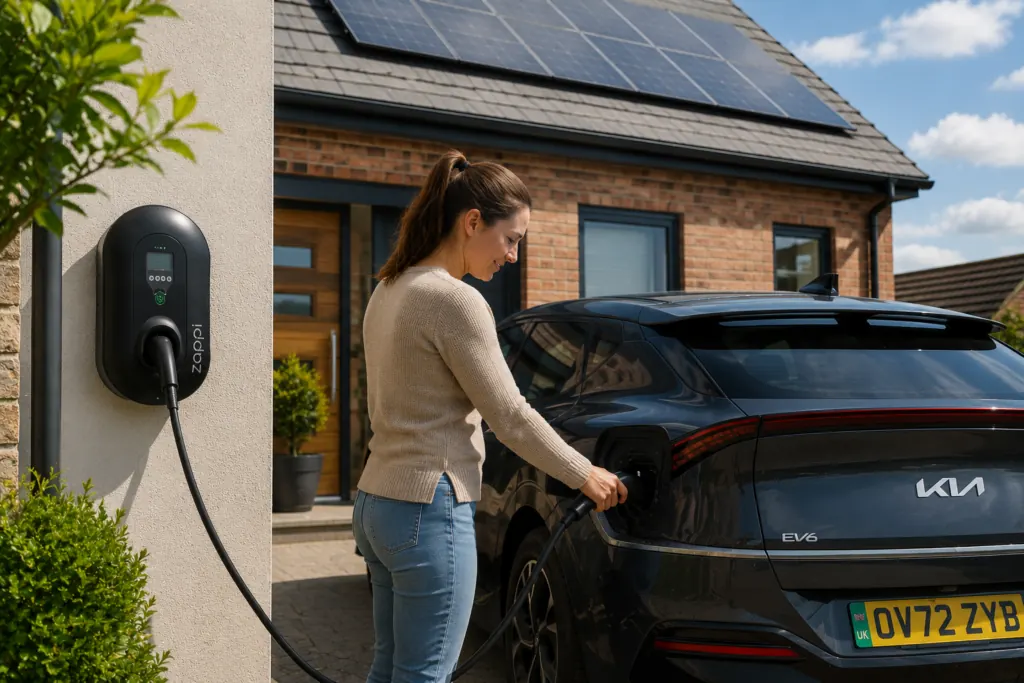
Customer charging car with EV from solar pannels
Planning Ahead for a Battery or EV Charger
Because you're deciding system size before installation rather than retrofitting, this is the right moment to think about what you might add later. If a battery or EV charger is even a possibility within the next few years, it's worth discussing a 'battery-ready' installation now — wiring and inverter selection that can accept a battery later without a fresh survey or significant extra disruption.
A 5–10kWh battery is typical for Scottish homes, with 10kWh being the more common choice for 3–4kW systems in an average-sized property. Bear in mind that a battery is itself an additional generating and exporting device from the DNO's point of view — if you add one later, the combined export capacity of the whole site (panels plus battery inverter) is what determines whether you're still within G98 limits, not the solar system in isolation. Our solar and battery storage page covers how the two work together in more detail.
The same logic applies to EV charging. A solar-aware charger such as a myenergi Zappi can divert daytime surplus generation to charge a car instead of exporting it at a lower rate — and a 4kW system generates meaningfully more of that surplus than a 3kW one, which is worth factoring in if an EV is on your radar even if you don't have one yet.
What This Means for Your Energy Bills
A 4kW system will usually generate more electricity than a 3kW system, but the exact uplift depends on your roof and usage pattern. As a rule of thumb, the extra installed capacity can improve annual savings, though the real-world number varies significantly from property to property.
For a Scottish home, the bigger question is often not just how much the system generates, but how much of that electricity you actually use yourself. If you are home during the day, work from home, or plan to add a battery, the larger system may provide more value because it can cover more of your own demand instead of being exported.
Does System Size Affect Grants and VAT?
Domestic solar PV installations in the UK currently qualify for 0% VAT, provided they meet the rules for residential energy-saving materials, and that reduced rate is scheduled to run until 31 March 2027 before reverting to 5% for eligible installs. Beyond VAT, funding routes such as the Home Energy Scotland Grant and Loan are generally aimed at renewable heating and related technologies, including solar thermal and hybrid solar PV/water heating systems, rather than standard standalone solar PV-only installations.
Where system size can matter is the Smart Export Guarantee. A larger system may produce more surplus electricity, which can mean higher export payments, provided the installation is MCS-certified and you have a smart meter in place.
Common Questions on 3kW vs 4kW
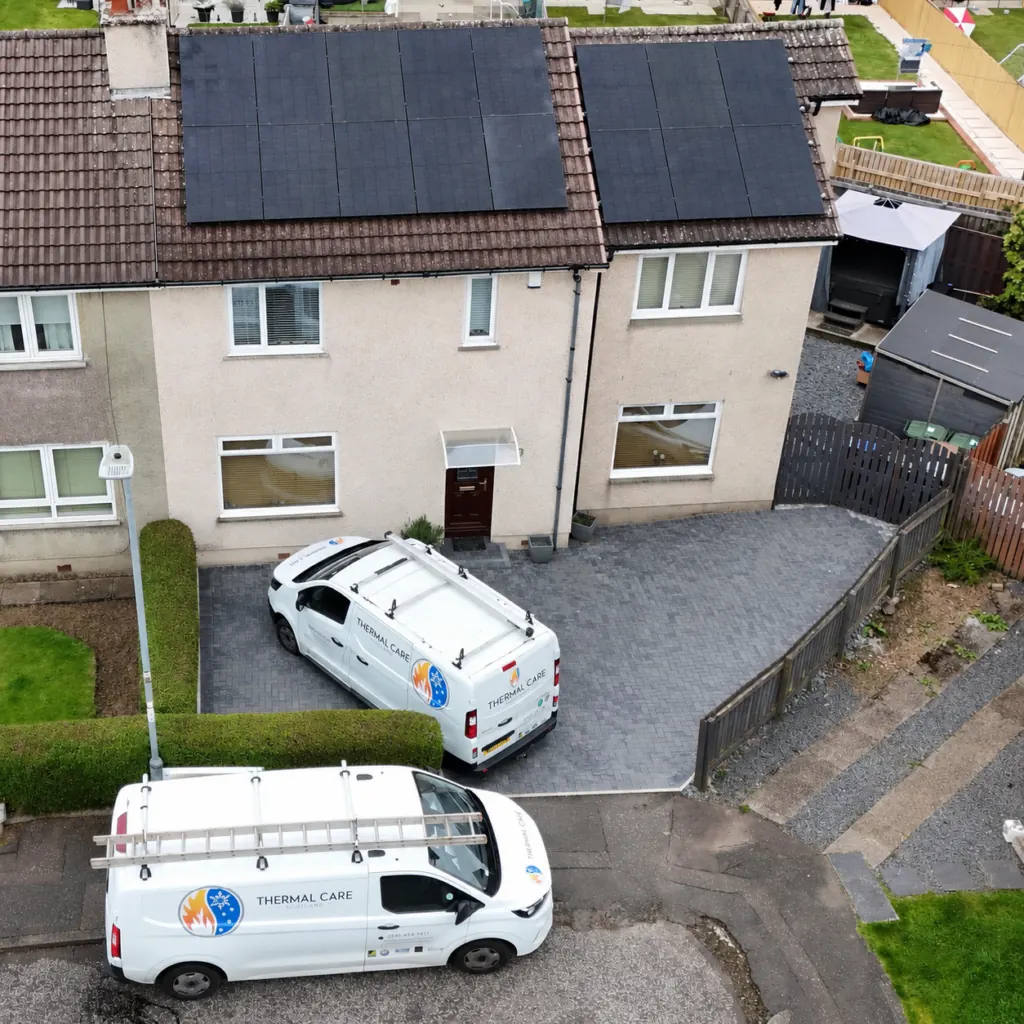
Thermal Care vans on client install
How Thermal Care Sizes Your System
For a new installation, we do not start from 3kW or 4kW as a fixed question. We start from your roof, your household’s likely energy use, and your plans for the next five to ten years, then work back to the system and inverter combination that fits.
That includes checking roof suitability, permitted development status, and whether G98 or G99 applies before any panels are ordered. If you are planning a new solar installation and want a straight answer on whether 3kW or 4kW is the better fit for your roof, it is worth discussing it as part of a site assessment.
You will find everything you need to know in our blog Solar Panels in Scotland: Everything You Need to Think About Before Installation
The financial and environmental case for solar in Scotland is strong — and it's only getting stronger. The key decisions are straightforward: assess your roof, size the system to your needs, check grant eligibility, and only use MCS-certified installers.
Thermal Care Scotland are MCS and RECC-accredited solar panel installers based in Bathgate, West Lothian, serving homes and businesses across Central Scotland. We'll give you an honest assessment of what solar will and won't do for your property — before you commit to anything.
📞 Book a no-obligation property assessment:Contact Us
Frequently Asked Questions
Can I install a 4kW array but keep the simpler G98 process?+
In many cases, yes, if the export limit remains within 3.68kW and your installer designs the system accordingly. The exact arrangement should always be confirmed in writing.
Will a 4kW system always cost noticeably more than 3kW?+
Usually not by a huge amount. The extra panel and labour cost is relatively modest compared with the overall installation, because scaffolding, rails, cabling, and commissioning are largely fixed.
What if my roof cannot fit 4kW?+
Then 3kW is the right answer. A good installer should be honest about roof capacity rather than forcing a larger array onto a roof that cannot comfortably take it.
Should I always install the biggest system my roof allows?+
Not necessarily. Oversizing beyond what your household is likely to use usually increases export more than self-use, so sizing to current and near-future demand is often the smarter approach.