
Why an MCS Certified Installer Is Essential for Solar Installs
Every solar quote you receive should include one detail that matters more than panel brand, price, or warranty length: whether the installer is MCS certified. It's easy to treat this as small print, but choosing an MCS certified installer determines whether you can claim grant funding, earn export payments, get finance approved, and hold anyone accountable if the installation goes wrong. This applies whether you're a homeowner in Bathgate having a 4kW system fitted by an MCS certified installer, or a business in Central Scotland installing a 50kW commercial array. This guide explains what it means to be MCS certified, why it matters differently for domestic and commercial projects, and how to check your installer really is MCS certified before you sign anything.
What Does MCS Certified Mean, and What Does It Do for You?
MCS is a UK quality standard for small-scale renewable installations. Being MCS certified means both the installer and the product or system meet the relevant MCS requirements — it isn't a single generic badge that automatically covers all equipment and all work, but a set of technology-specific standards that the installer and the product both need to satisfy.
For an installation to count as MCS certified, both the installer and the product or system generally need to meet MCS's requirements for that specific technology (Home Energy Scotland notes a case-by-case exception for micro-hydro systems). Miss either side and the installation isn't genuinely MCS certified — regardless of how competent the installer's electrician might personally be.
In practice, using an MCS certified installer can be important for:
- Access to the Smart Export Guarantee (SEG) through the standard eligibility route
- Meeting the certification requirements tied to certain grant and funding schemes
- Documentation that supports the grid connection and export process
- Consumer protection arrangements many reputable installers provide as part of MCS membership
- A documented installation standard useful for mortgage, resale, or dispute purposes
For the fuller picture on what to check before any installation — roof suitability, costs, and grants alongside choosing an MCS certified installer — see our complete guide: Solar Panels in Scotland: Everything You Need to Think About Before Installation.
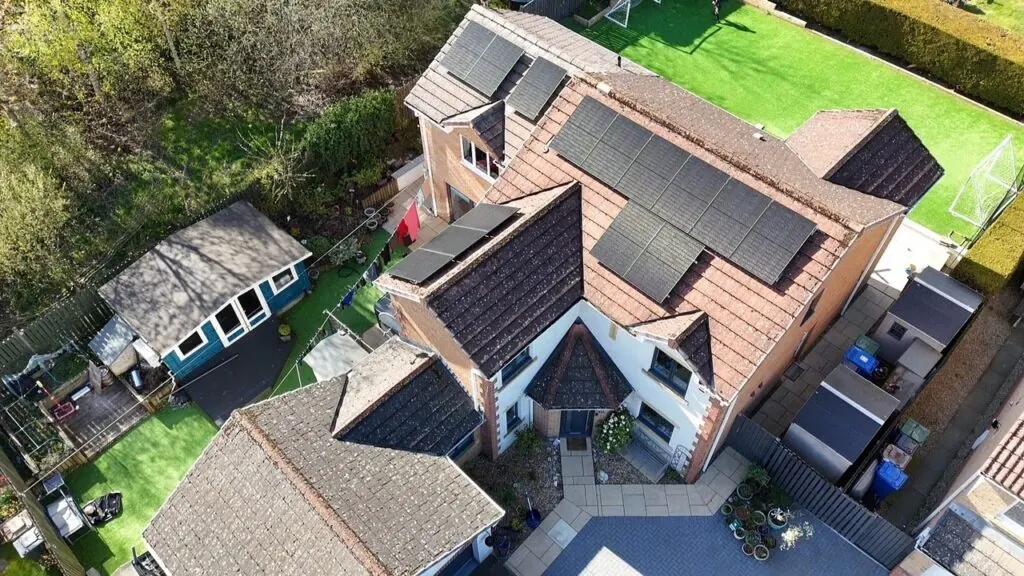
Domestic solar install by MCS certified installer
Why an MCS Certified Installer Matters for Domestic Solar Installations
For homeowners, using an MCS certified installer isn't optional paperwork — it underpins most of the financial benefits that make solar worthwhile in the first place.
Smart Export Guarantee payments. Any electricity you export to the grid can earn a payment from your supplier. MCS certification is generally required for SEG eligibility through the standard route, so using an MCS certified installer keeps this option open.
Grant and funding eligibility. Where a Home Energy Scotland grant or loan applies to an eligible renewable system, the installer and product must meet the scheme's certification requirements — normally an MCS certified installer and an MCS or Solar-Keymark certified product. It's worth checking exactly what's currently funded before assuming standard solar PV qualifies on its own, as funded measures and eligibility change over time. Our grants guide breaks down what's currently available: Solar Panel Grants & Funding in Scotland. (Correct as of July 2026 — always confirm current terms directly with Home Energy Scotland.)
Consumer protection and warranty arrangements. This is the detail most homeowners only think about after something goes wrong. Reputable MCS certified installers usually provide consumer protection and warranty arrangements as part of their MCS membership, but the exact cover can vary, so it's worth checking the specifics in writing before you sign. We've covered what happens when this protection is and isn't in place following a recent industry administration: What Happens If Your Solar or Battery Supplier Goes Bust?.
Mortgage and resale value. An uncertified installation can create complications during a sale or remortgage, because buyers and lenders may ask for evidence that the system was installed to an accepted standard. Being able to show your installer was MCS certified is the simplest way to answer that question.
Grid connection and export. Grid connection rules depend on the size and type of system, and MCS certification can be part of the wider compliance and notification process — but the connection requirements themselves come from the network operator, via the standard G98/G99 notification process, rather than from MCS directly.
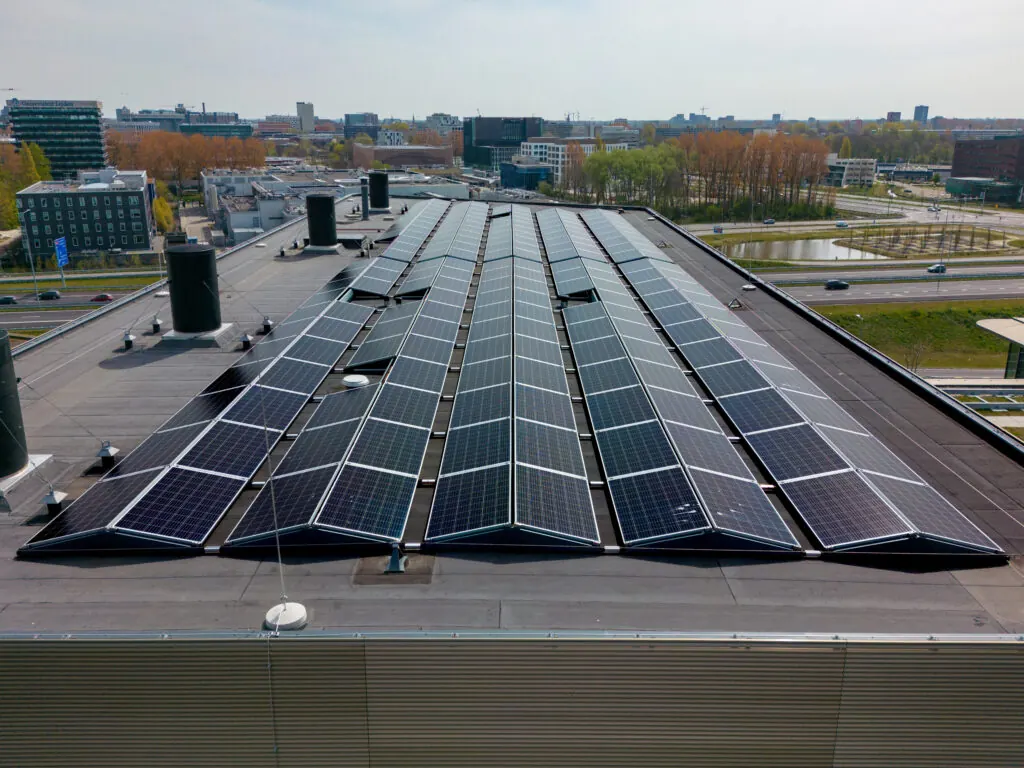
Commerical solar install by MCS certified installer
Why an MCS Certified Installer Matters for Commercial Solar Installations
Commercial solar decisions are usually driven by return on investment, so it's tempting to assume this is a residential concern. It isn't. For commercial and business premises across Central Scotland, using an MCS certified installer carries its own set of consequences.
Funding and finance approval. Commercial energy grants, green business loans, and asset finance providers commonly require an MCS certified installer as a lending condition, in the same way domestic lenders do. An installer who isn't MCS certified can narrow your funding options before you've even compared quotes.
Export income at scale. Commercial systems generate — and export — far more electricity than domestic ones. Losing SEG eligibility on a 50kW+ commercial array because the installer wasn't MCS certified represents a materially larger financial hit than on a household system, directly affecting payback calculations.
Procurement and tender requirements. Public sector contracts, and increasingly private commercial tenders, specify an MCS certified installer as a baseline requirement. If your business ever needs to demonstrate the provenance of your energy installations — for ESG reporting, due diligence, or a future sale of the premises — proof that your installer was MCS certified is the paper trail that shows it was done properly.
Liability and risk management. A commercial installation carries higher stakes than a domestic one: larger financial exposure, more complex electrical infrastructure, and greater consequences if something fails. Using an MCS certified installer means the design and installation followed an audited technical standard, underpinned by MCS's consumer protection framework — a materially different risk position than relying on an uncertified contractor's own assurances.
Combining technologies. Many commercial projects pair solar with EV charging infrastructure for fleet or staff vehicles, which raises the stakes further if the installer handling any part of the work isn't MCS certified. See our EV Charger Services for how this is typically approached alongside a commercial solar project.
Why Checking Your Installer Is Genuinely MCS Certified Really Matters
The most common mistake isn't hiring an installer who isn't MCS certified at all — it's assuming they are when the accreditation isn't quite what it seems. A few things are worth checking specifically, rather than taking on trust:
Is the certificate current, not historical? MCS certification can lapse or be withdrawn. A company's marketing materials showing the MCS logo don't confirm the installer is still MCS certified today.
Does it cover the specific technology being installed? Being MCS certified is technology-specific. An installer certified for solar PV isn't automatically MCS certified for battery storage, and vice versa. If your project includes both, check both are covered.
Is the company on the certificate the company doing the work? Subcontracting is common in the solar industry. The MCS certified business on the certificate needs to be the one actually designing and fitting your system — not a separate certified business lending its name to the sale.
You can verify any installer is genuinely MCS certified directly through the MCS installer database, and a reputable installer will provide their certificate number without being asked twice.
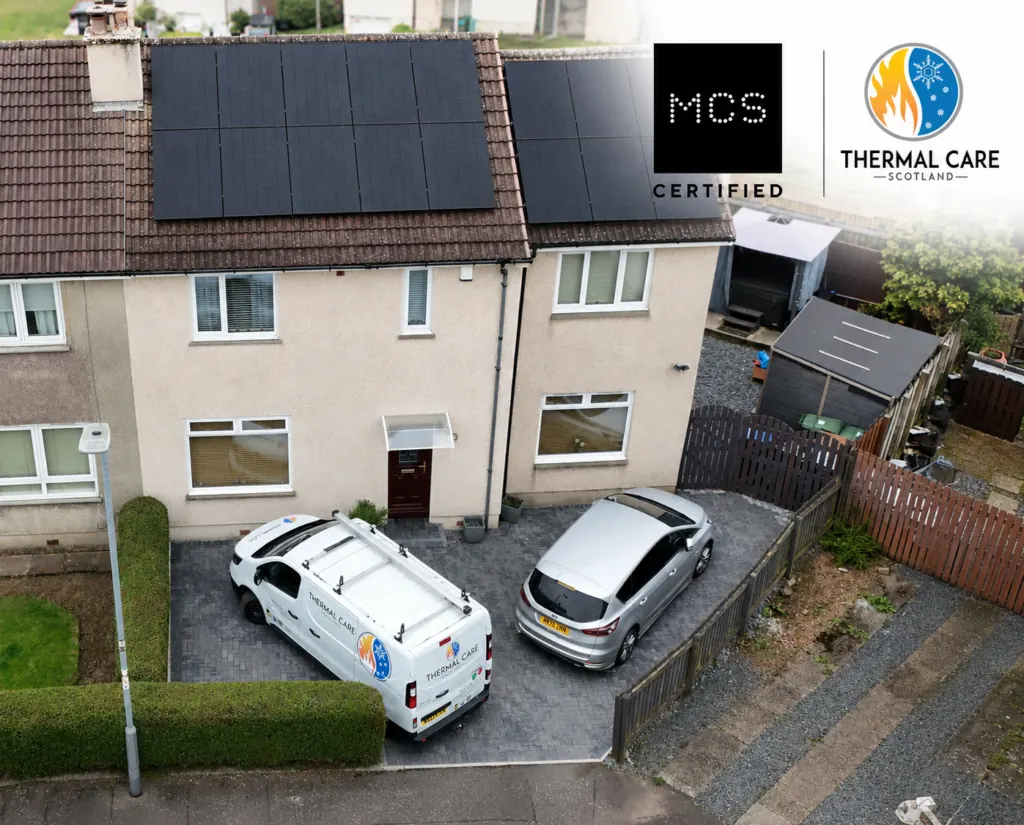
Domestic solar install by MCS certified installer
How Thermal Care Scotland Ensures Every Installation Is MCS Certified
Thermal Care Scotland is an MCS certified and RECC-accredited installer, covering both solar PV and battery storage installations across domestic and commercial projects in Central Scotland. Every installation — from a single residential roof in Bathgate to a multi-panel commercial array — is designed, fitted, and certified by an MCS certified team, with the paperwork to prove it.
Frequently Asked Questions
What does MCS certified mean?+
MCS certified means both the installer and the product or system have met the requirements of the Microgeneration Certification Scheme (MCS) — a UK quality standard covering products used and the competence of the installer fitting them, for that specific technology.
Do I need an MCS certified installer for solar panels in Scotland?+
It isn't a legal requirement, but MCS certification is generally needed to access the Smart Export Guarantee and any grant or loan scheme that requires a certified installer and product — which covers most current funding routes. That makes it the sensible standard to look for on practically any installation.
Can I get the Smart Export Guarantee without an MCS certified installer?+
Not usually. MCS certification is generally required for SEG eligibility through the standard route, so most suppliers will expect an MCS certified installation before registering you for export payments.
Is an MCS certified installer required for commercial solar installations?+
Yes, in the same way as domestic installations. Commercial funding, tender requirements, and export income are all affected by whether your installer is MCS certified.
What happens if my installer isn't MCS certified?+
You typically lose access to SEG payments and most grant funding, and you may not have the consumer protection and warranty arrangements that come with MCS membership if the installer later stops trading.
Ready to Talk to an MCS Certified Installer?
Ready to Talk to an MCS Certified Installer?
Whether you're planning a domestic installation or assessing solar for a commercial premises, confirming your installer is MCS certified should be the first thing you check — not an afterthought once the quote arrives. Thermal Care Scotland is an MCS certified and RECC-accredited installer, serving homes and businesses across Central Scotland from our base in Bathgate, West Lothian.
Call 01506 894600, email scotland@thermalcare.co.uk, or visit thermalcare.co.uk to book a no-obligation assessment.