
Do you need planning permission for air conditioning in Scotland?
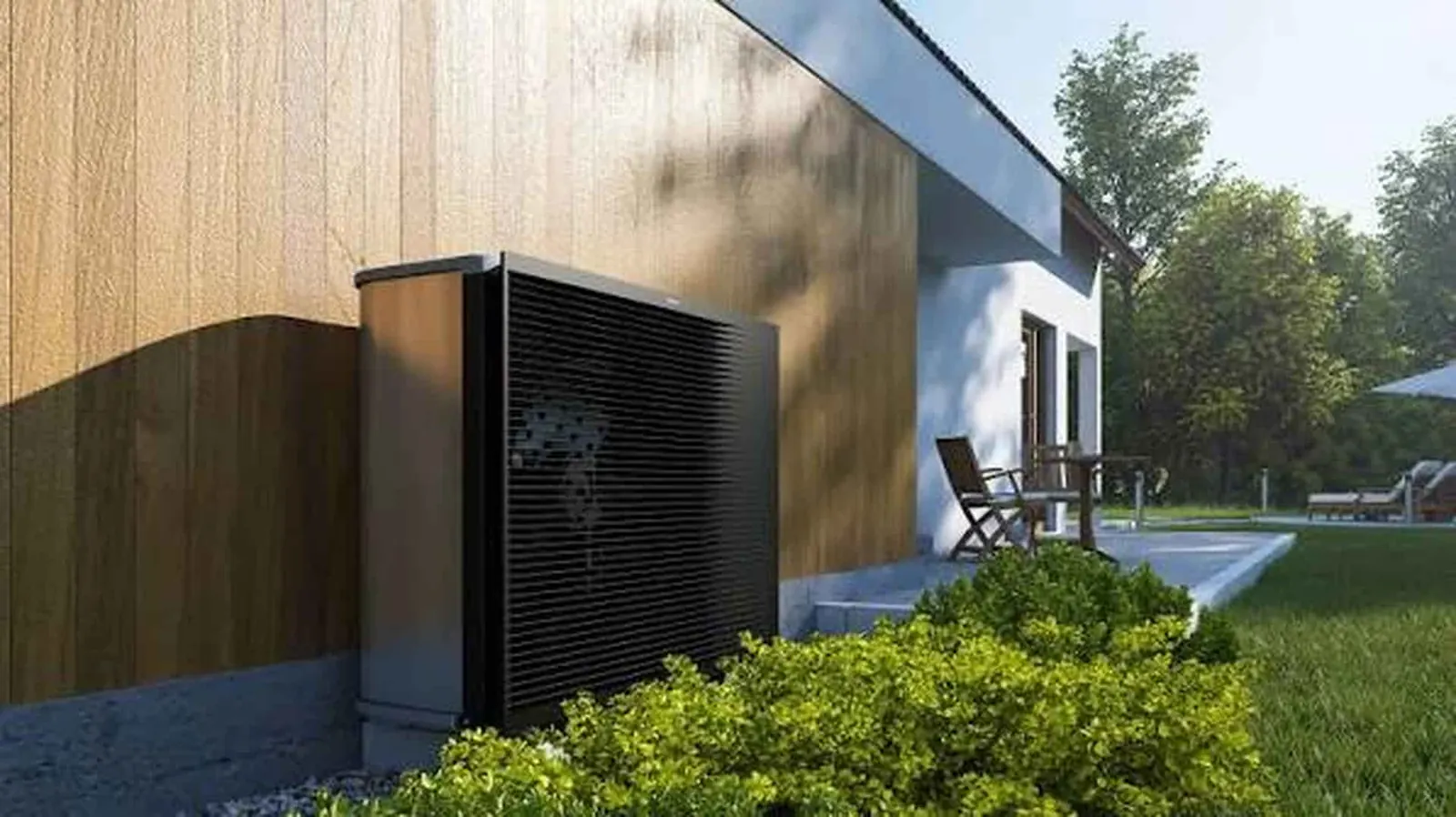
Often not, for a house — but it isn’t automatic. Scotland’s permitted development rules let you fit one air source heat pump on a home without applying, provided it meets size, siting and noise conditions. Flats, listed buildings, conservation areas and World Heritage Sites change the answer, and the rules were written with heating in mind, not cooling.
That last point matters, so we’ll be straight about where the law is clear and where it isn’t.
What the law actually says
Householder permitted development in Scotland sits in the Town and Country Planning (General Permitted Development) (Scotland) Order 1992, as amended. Air source heat pumps are covered by Class 6H, which permits “the installation, alteration or replacement of an air source heat pump on a dwelling or within the curtilage of a dwelling”. The current text reflects amendments made most recently in May 2024.
The Scottish Government’s Planning Circular 1/2024 explains that, for this class, “dwelling” means “a dwellinghouse, a building containing one or more flats or a flat contained within such a building”. So in Scotland, unlike some other parts of the UK, flats aren’t excluded outright — but, as you’ll see, the limits bite hard on them.
The Class 6H limits, in plain English
Your installation is not permitted development if:
| Rule | What it means for you |
|---|---|
| More than one air source heat pump on the same building or within its curtilage | One outdoor unit per building. On a tenement or block, if a neighbour already has one, you’re likely outside permitted development. |
| Protrudes more than 1 metre from the wall, roof plane, ridge or chimney | Wall-bracket outdoor units must stay within 1 m of the wall. |
| In a conservation area, unless at ground floor level on the rear elevation | Front, side or upper-floor positions need an application. |
| In a World Heritage Site, or within the curtilage of a listed building | Always needs an application. Edinburgh’s Old and New Towns are a World Heritage Site. |
| Freestanding in the garden: forward of a principal or side elevation fronting a road, or over 3 m tall | Keep ground units to the back or a side that doesn’t face a road. |
And the installation must meet three conditions:
- It is only used “for the purpose of providing domestic heating or hot water”.
- It is removed as soon as reasonably practicable once it’s no longer needed.
- It complies with the MCS Planning Standards for air source heat pumps (MCS 020, Issue 1.3) or equivalent — in practice, a noise calculation to the nearest neighbouring window.
You’ll notice there is no minimum distance from the boundary in the current Scottish rules. The controls are the 1 m protrusion limit, the one-per-building limit, location restrictions and the noise standard.
Is air conditioning treated the same as a heat pump?
This is the honest grey area.
A modern split air conditioner — like the Daikin systems we fit — is an air-to-air heat pump. Every system we install is reversible and heats as well as cools. Physically, the outdoor unit is an air source heat pump.
But Class 6H doesn’t define “air source heat pump”, and its first condition says the unit may only be used for domestic heating or hot water. A system installed mainly to cool a bedroom or office in summer doesn’t obviously fit that wording. Planning Circular 1/2024 doesn’t mention air-to-air units or air conditioning at all.
So we won’t tell you that air conditioning is definitely permitted development. What we can say:
- If the system is genuinely your home’s heating (for example, replacing electric panel heaters) and it meets the siting and noise limits, there is a reasonable case it falls within Class 6H.
- If it’s mainly for cooling, the legislation is unclear, and some councils may take the view that it needs permission.
- Where there’s doubt, the safe route is to ask the council for a formal view before installation, rather than after a neighbour complains.
Flats and tenements: the consent you might forget
Even if planning is clear, a flat usually needs someone else’s permission.
Common property. Under the Tenement Management Scheme in the Tenements (Scotland) Act 2004, the external walls, roof and foundations of a tenement count as “scheme property” unless your title deeds say otherwise. Drilling a core hole and hanging an outdoor unit on the gable affects property you share with your neighbours.
Title deeds and factors. Many deeds and deeds of conditions require the factor’s or co-proprietors’ consent for external fixtures. Check yours before booking an install, and get agreement in writing.
Landlords. If you rent, you need your landlord’s written permission.
The one-per-building limit. Because Class 6H allows only one air source heat pump per building, flats in blocks often end up outside permitted development anyway.
We always survey flats and communal buildings before quoting — they’re never estimated online.
Listed buildings: planning permission isn’t the only consent
For a listed building, Class 6H doesn’t apply, so you’ll need planning permission. You will usually need listed building consent as well. The Planning (Listed Buildings and Conservation Areas) (Scotland) Act 1997 says no one may alter a listed building “in any manner which would affect its character as a building of special architectural or historic interest” unless the works are authorised. Pipe runs, core holes and a visible outdoor unit can all do that.
Historic Environment Scotland’s Short Guide 15: Air Source Heat Pumps in Traditional Buildings is worth reading first.
Do you need a building warrant?
In most houses, probably not — but the work still has to meet the building standards.
Schedule 3 of the Building (Scotland) Regulations 2004 lists work that doesn’t need a warrant, including most “work to or in a house” and work on “a heating installation”. The exceptions include demolition or alteration of external walls or structure, work adversely affecting a separating wall, and houses with a storey above 4.5 m.
The Scottish Government’s procedural handbook is clear that such work “must still comply with the building standards”.
Flats, commercial premises and anything that touches a separating wall or floor are more likely to need a warrant or a conversation with building standards.
A quick checklist before you book
- House outside conservation areas and World Heritage Sites, not listed? Likely permitted development for a heating-led system that meets the limits above.
- Cooling-led, flat, conservation area or listed? Check with your council, your factor or co-owners — and book a survey.
If you’re weighing up a system that heats your home through radiators instead, see our air source heat pumps page — the same Class 6H rules apply, and there’s a Home Energy Scotland grant for air-to-water systems.
Frequently asked questions
Can I put an air conditioning unit on the front of my house in Scotland?+
Outside conservation areas, Class 6H doesn’t ban front-wall units on the house itself, provided they protrude no more than 1 m and meet the noise standard. In a conservation area, only ground-floor rear-elevation units qualify. A freestanding ground unit can’t sit forward of an elevation facing a road. Your council may still take a view on cooling-led installs, so check first if you’re unsure.
Do I need my neighbours’ permission for air conditioning?+
In a detached or semi-detached house, not for planning purposes, though a quiet word is good manners and MCS 020 noise limits protect them. In a tenement or block of flats you share the external walls, so you’ll usually need consent from co-owners or the factor under your title deeds or the Tenement Management Scheme. Get it in writing before installation.
Is air conditioning allowed in a conservation area?+
It can be, but permitted development only covers an air source heat pump at ground floor level on the rear elevation. Anything else needs planning permission. If the building is also listed, you’ll need listed building consent too. Talk to your council’s planning team early, and choose a discreet outdoor unit position — we can advise on this at survey.
What happens if I install air conditioning without permission?+
If the council decides it needed planning permission, it can ask you to apply retrospectively and, if refused, require the unit’s removal. Listed building works without consent are more serious still, and unauthorised work can surface when you sell. Checking first is far cheaper.
Does Thermal Care handle planning for me?+
We’ll tell you at survey what we think applies to your property and flag anything that needs checking — flats, listed buildings, conservation areas and communal elevations always get a closer look. Approvals remain the owner’s responsibility.
Get a straight answer
Not sure where you stand? We’ll look at your property, tell you honestly whether it’s likely to need permission, and give you a fixed price for air conditioning installation after a free survey. Call 01506 894600 or request a free survey. Commercial premises? See commercial air conditioning.
Sources
- The Town and Country Planning (General Permitted Development) (Scotland) Order 1992, Sch. 1 Class 6H (revised) — https://www.legislation.gov.uk/uksi/1992/223/schedule/1/part/1A
- The Town and Country Planning (General Permitted Development) (Scotland) Amendment Order 2024 (SSI 2024/102), which specifies MCS 020 Issue 1.3 — https://www.legislation.gov.uk/ssi/2024/102/made
- Planning Circular 1/2024: Householder permitted development rights, section 6 (gov.scot, May 2024) — https://www.gov.scot/publications/circular-1-2024-householder-permitted-development-rights/pages/6/
- Tenements (Scotland) Act 2004, Schedule 1 (Tenement Management Scheme) — https://www.legislation.gov.uk/asp/2004/11/schedule/1
- Planning (Listed Buildings and Conservation Areas) (Scotland) Act 1997, s.6 — https://www.legislation.gov.uk/ukpga/1997/9/section/6
- Historic Environment Scotland, Short Guide 15: Air Source Heat Pumps in Traditional Buildings — https://www.historicenvironment.scot/publications/all/publication/?publicationId=d91d661e-1c32-4cf0-bd9e-b33200a10b7e
- Building standards technical handbook 2022: domestic, 0.5 / Schedule 3 (gov.scot) — https://www.gov.scot/publications/building-standards-technical-handbook-2022-domestic/0-general/0-5-buildings-work-services-fittings-equipment-not-requiring-warrant/
- Building standards: procedural handbook, section 2 (gov.scot) — https://www.gov.scot/publications/procedural-handbook/pages/3/