
Contents
As Scottish temperatures drop and your heating runs longer each day, you've probably noticed the impact on your energy bills. With costs rising across the board, getting the most from your boiler and managing boiler efficiency has never been more important – but that doesn't mean you need to rush into expensive replacements.
Most Scottish homeowners can significantly improve their boiler efficiency and reduce heating costs with simple maintenance and smart adjustments. Whether your boiler is five years old or fifteen, there are practical steps you can take today to keep your home warm without breaking the bank.
In this guide, we'll walk you through everything from understanding boiler efficiency ratings to knowing when repairs make more financial sense than replacement. No pressure, no scare tactics – just honest advice to help you make the best decision for your home and budget.

Understanding Your Boiler's Efficiency
What Do Boiler Efficiency Ratings Actually Mean?
Every boiler has a SEDBUK (Seasonal Efficiency of Domestic Boilers in the UK) rating that tells you how much of the fuel it burns actually becomes usable heat. Think of it like miles per gallon in your car – the higher the number, the less you're spending on wasted energy.
Modern A-rated boilers achieve 90% boiler efficiency or higher, meaning 90p of every pound you spend on gas becomes heat for your home. Older G-rated models might only manage 70% or less – that's 30p of every pound literally going up the flue.
But here's what we always tell our customers: your existing boiler's efficiency rating is just one part of the picture. A well-maintained older boiler can often outperform a neglected newer model.
How Age Affects Boiler Efficiency
Boilers naturally lose efficiency over time as components wear and internal parts accumulate deposits. A typical boiler loses about 1-2% efficiency per year without regular servicing. That might not sound like much, but over a decade, it adds up to significant extra costs.
What this means for your bills:
- 5-year-old boiler: Likely running at near-original efficiency with proper maintenance
- 10-year-old boiler: Could be 10-15% less efficient without regular servicing
- 15+ year-old boiler: Potentially 20-30% less efficient, plus higher repair risks
The good news? Regular servicing can slow this decline dramatically. A well-maintained 15-year-old boiler can still run at 85% efficiency depending on lifestime usage – perfectly respectable and cost-effective.
Warning Signs Your Boiler Is Working Too Hard
Your boiler will tell you when it's struggling with efficiency. Watch for these signs that indicate it's time for attention:
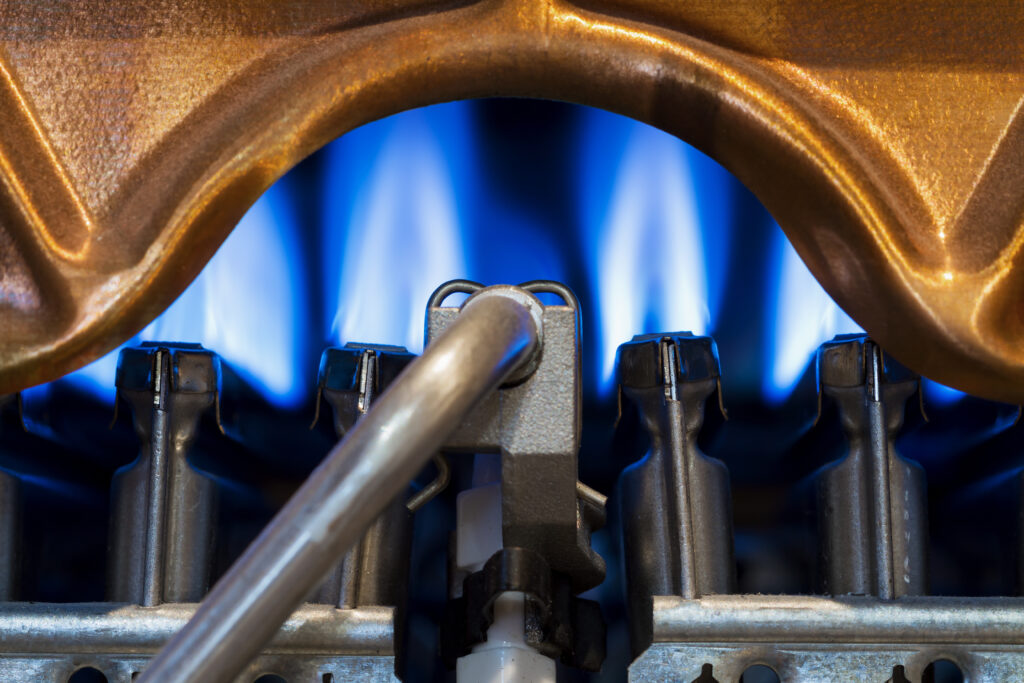
- Yellow or orange flame instead of blue
- Boiler is making unusual sounds
- Radiators taking ages to heat up
- Frequent cycling on and off
- Rising bills without increased use
Read our blog post Boiler Not Working? 5 Warning Signs It Won't Survive for more detail on how to spot these signs
These issues don't always mean replacement – many can be resolved with proper servicing or minor repairs. That's why it's worth getting a professional assessment before assuming the worst.
Proven Ways to Improve Your Current Boiler's Efficiency
1. Annual Servicing: Your Best Investment
At £80-100, annual servicing is the single most cost-effective way to maintain boiler efficiency. It's not just about preventing breakdowns – though that alone can save you hundreds in emergency callouts.
During a service, your Gas Safe engineer will:
- Clean key components that affect efficiency
- Check and adjust gas pressure for optimal burning
- Test safety devices and controls
- Identify minor issues before they become major problems
Regular servicing helps 10-year-old boilers maintain 80–85% of their original efficiency, while neglected units can drop to 70% or lower. On the average Scottish gas bill, this difference can mean paying around £1,000 a year instead of £1,300 or more, depending on usage and insulation
2. Radiator Maintenance That Makes a Difference
Your radiators are your boiler's delivery system – when they're not working properly, your boiler works overtime trying to compensate.
Bleeding your radiators takes just a few minutes and can significantly improve heating efficiency—especially if your radiators are cold at the top, which signals trapped air stopping hot water circulation. This simple fix ensures your system heats evenly and isn’t wasting energy by working harder than necessary
Here's how:
- Turn off your heating and let radiators cool
- Use a radiator key on the valve (usually at the top corner)
- Turn anti-clockwise until you hear hissing air escaping
- When water starts dripping, quickly close the valve
- Check your boiler pressure afterwards
System flushing might be needed if radiators are cold at the bottom (sludge buildup) or have cold patches in the middle. While this requires a professional (£300-500), it can restore significant efficiency to older systems and extend your boiler's life.
3. Optimising Boiler Pressure and Flow Temperature
Your boiler pressure should typically sit between 1 and 1.5 bar when cold (check your manual for specifics). Low pressure forces your boiler to work harder, while high pressure can cause damage.
If pressure drops regularly, you might have a small leak – worth investigating before it becomes a big problem. Topping up pressure is simple (your manual shows how), but if you're doing it monthly, call an engineer.
Flow temperature is the temperature of water leaving your boiler to heat radiators. Many boilers are set higher than necessary—often around 75°C or more. Reducing the flow temperature to 60°C can improve heating efficiency by around 9–12% by allowing your boiler to run in condensing mode more frequently. This won’t affect your comfort significantly, but your rooms may take slightly longer to warm up
4. Smart Use of Heating Controls
Your existing controls probably have energy saving tips built in that you're not using. Even basic programmers can significantly reduce bills when used properly. For every degree you lower your thermostat, you typically save around 6–10% on your heating bill.
Set different temperatures for different times:
- 18-19°C when you're active during the day
- 20-21°C for evening relaxation
- 16°C overnight (unless you have young children or health conditions)
Thermostatic Radiator Valves (TRVs) let you set different temperatures in different rooms. For example, a spare room is one of the least used rooms in any home, with a TRV you can keep this room's temperature set to 16°C with the door closed to help reduce costs. Installing TRVs costs £15–£40 each, with typical UK installation bringing the total to £50–£150 per radiator. They can reduce heating costs by 15–20% in average homes.

Smart Heating Controls
You don't need to replace your boiler to benefit from smart technology. Modern controls can make even older boilers significantly more efficient.
Smart thermostats (£150–£250 installed) learn your routine and automatically adjust your heating. Most UK homes see savings of 10–18% on heating bills, with figures up to 28–30% achievable in ideal scenarios with multi-zone controls and geofencing. Many work with all boiler types, including older models.
The beauty of smart controls is the insight they provide. You can see exactly when and how much energy you're using, helping you spot waste and adjust habits. Our customers often discover they've been heating empty homes for hours without realising it.
When Efficiency Improvements Aren't Enough
Recognising the Replacement Tipping Point
Sometimes, despite your best efforts, maintaining an old boiler becomes false economy. We help customers make this decision every day, and it usually comes down to three factors:
- The 50% rule: If annual repair costs exceed 50% of a replacement boiler's price, replacement makes financial sense. With new boilers typically costing £1,800–£3,000 installed in 2025, that means repair bills over £900-1,500 annually.
- Availability of parts: Boilers over 15 years old often have discontinued parts. When simple repairs become treasure hunts for components, costs escalate quickly.
- Running costs vs savings: Calculate the difference between your current bills and what you'd pay with a new A-rated boiler. For many homes, annual savings are £200–£400, with £400+ achievable in some cases. At this rate, a new boiler pays for itself within 7–10 years..
Read out guide Boiler Repair or Replacement, or Service? Making the Right Choice
Making Replacement Affordable
We understand that even when replacement makes sense, finding £1,800+ isn't always possible. That's why we've partnered with Phoenix Financial Consultants to offer flexible payment options.
Try their calculator below which will show you monthly payments for different terms

This means you can start saving on energy bills now while managing the investment in a way that works for your budget.
Whether you're maintaining your current system or considering an upgrade, we're here to provide honest advice without pressure. Every home and situation is different – there's no one-size-fits-all answer.
Your Winter Boiler Efficiency Checklist
Before Winter Arrives:
- Book annual boiler service
- Bleed all radiators
- Check boiler pressure (1-1.5 bar)
- Test thermostat and controls
- Check and insulate any exposed pipes
- Clear area around boiler vents
- Check carbon monoxide alarm batteries
Throughout Winter:
- Monitor energy usage and bills
- Adjust heating schedule for actual needs
- Keep furniture away from radiators
- Close curtains at dusk to retain heat
- Report unusual noises or behaviour immediately
- Top up pressure if needed (not repeatedly)
After Winter:
- Review total heating costs
- Note any recurring issues
- Consider if system met your needs
- Plan any upgrades for next season
- Book spring/summer service (often cheaper)
Keep Your Home Warm and Your Bills Down
Improving your boiler efficiency doesn't require expensive replacements or complex upgrades. Small changes – regular servicing, proper radiator maintenance, smart control use – can deliver meaningful savings while keeping your home comfortable.
The key is understanding what your system needs and taking action before small issues become big problems. Whether that's bleeding your radiators this weekend, booking an overdue service, or getting honest advice about your boiler's future, you're in control.
Remember, a well-maintained older boiler often makes more financial sense than a neglected newer model. There's no pressure to upgrade unless it truly benefits your situation. We're here to support you wherever you are in your heating journey – from annual servicing to emergency repairs to eventual replacement when the time is right.
Ready to improve your boiler's efficiency this winter?
Our Gas Safe registered engineers provide thorough servicing across Scotland, helping you save money and stay warm all season long. We'll assess your system honestly and help you understand exactly what it needs – nothing more, nothing less.
Get in touch today for your boiler service or free efficiency assessment:
Whatever heating system you have, we're here to help you get the most from it.